Why Georgia Attics Get So Hot in Summer and How Spray Foam Fixes It
Spray foam attic insulation solves a problem most Georgia homeowners never actually diagnose. On a 92 degree afternoon in Newnan, the space above your ceiling can climb past 140 degrees, which turns your attic into a low grade oven sitting on top of your living room. That heat does not politely stay where it is. It radiates downward, warms your ceiling drywall, and hands your air conditioner a fight it cannot win.
Ever wonder why the upstairs bedrooms stay stubbornly warm no matter what you do to the thermostat? The answer is usually eight feet above your head, and your HVAC system is not the guilty party.
How Hot Georgia Attics Actually Get in July and August
A Georgia attic in midsummer routinely runs 40 to 60 degrees hotter than the outdoor air. That is not marketing exaggeration. Dark asphalt shingles absorb solar radiation for roughly ten hours a day, and an unsealed attic has no meaningful way to shed it.
The detail that catches people off guard is what happens after sunset. A poorly sealed attic can still sit above 90 degrees at midnight, so your cooling system never gets the overnight recovery window it was engineered around. Instead it short cycles through the night, drives up your power bill, and quietly shortens its own service life.
Why Ridge Vents and Attic Fans Are Not Enough in Georgia Humidity
Will adding more vents fix a hot attic? Rarely, and in Georgia it can backfire. Ventilation works by exchanging attic air with outdoor air, a reasonable strategy in a dry climate. Ours is not one. When outdoor air sits at 92 degrees and 70 percent humidity, an attic fan spends the afternoon pulling hot, moisture heavy air into your roof cavity.
Powered fans introduce a second issue. They can depressurize the attic enough to pull conditioned air up through ceiling gaps, recessed lights, and duct penetrations. Your air conditioner ends up cooling the attic, which is an expensive way to accomplish nothing.
How Spray Foam Attic Insulation Creates a Sealed Thermal Barrier
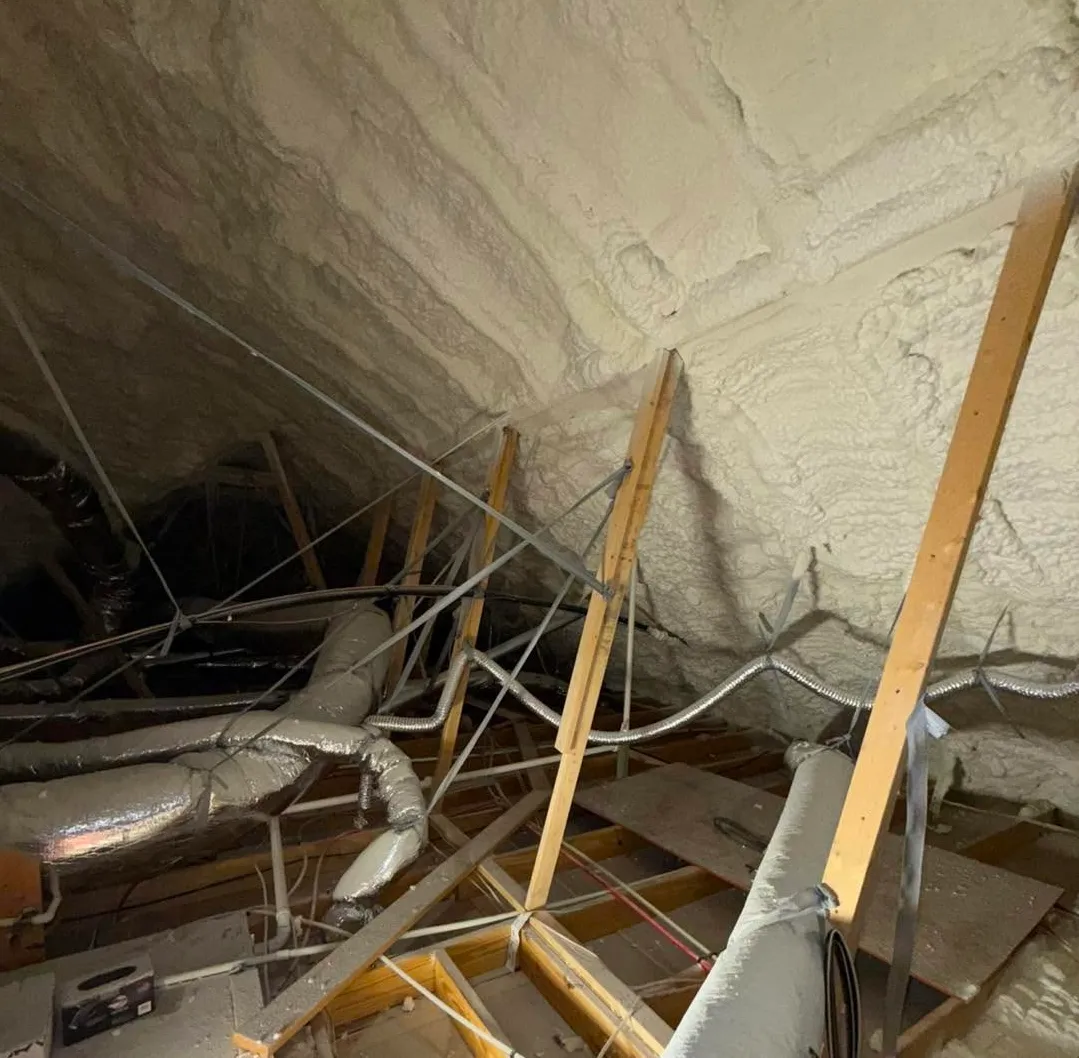
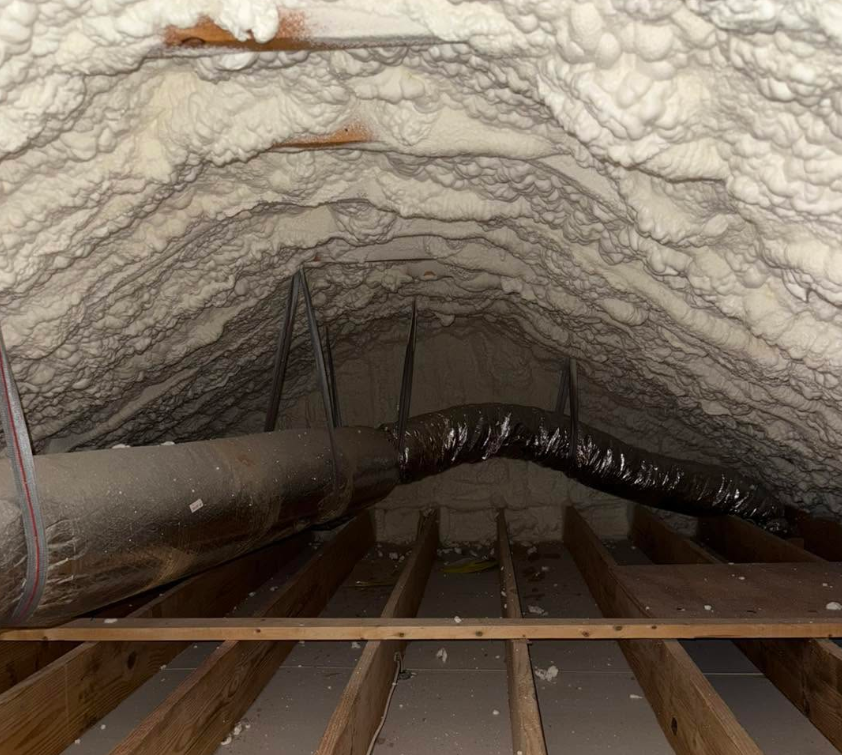
Traditional batt and blown insulation slows heat transfer but does nothing about air movement, and air leakage is where most of the loss happens. Spray foam attic insulation takes a different approach. Applied directly to the underside of the roof deck, it expands into every gap, seam, and rafter bay, forming a continuous air barrier and thermal layer at once.
The result is a conditioned attic. Instead of a 145 degree space above your ceiling, that area stays within roughly 10 to 15 degrees of your indoor temperature. Attic ductwork finally operates in a reasonable environment, and the roof deck stops working like a radiator aimed at your bedrooms.
Open Cell vs Closed Cell Spray Foam for Georgia Attics
Which spray foam is right for a Georgia attic? Both perform well, and the honest answer depends on your roof structure, moisture conditions, and budget rather than a blanket rule.
Open cell is the common choice for residential attic decks in our climate zone because it delivers strong air sealing at a friendlier price and allows the roof assembly to dry inward.
Closed cell earns its premium where moisture intrusion, limited cavity depth, or added structural strength matter, which is why it appears often in crawl spaces and metal buildings.
What a Professional Attic Spray Foam Installation Looks Like With Elite Coatings and Insulation
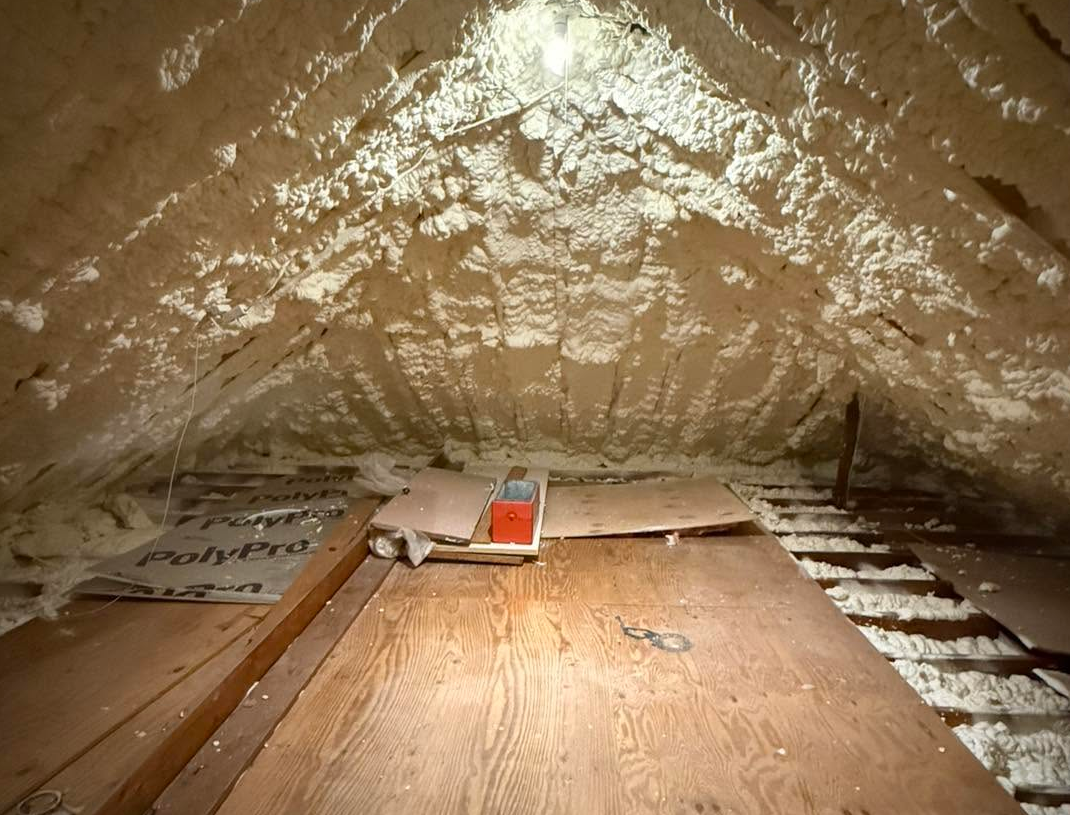
Every attic tells a different story, so our process starts with looking rather than quoting. A typical residential project runs one to two days.
On site assessment. We inspect insulation condition, ventilation, moisture signs, and duct placement first.
Removal when needed. Contaminated material comes out first, because foam applied over failing insulation inherits every problem underneath it.
Preparation. Soffits, penetrations, and living areas are protected.
Application. Foam is sprayed to specified thickness across the roof deck and gable ends.
Walkthrough. We confirm coverage and leave the space clean.
Michael and our crew handle every install directly, which is how a family owned company keeps quality consistent.
Get a Free Spray Foam Attic Insulation Assessment From Elite Coatings and Insulation
You do not need to guess what your attic is doing to your energy bills. A free on site assessment from Elite Coatings and Insulation gives you real numbers, an honest recommendation, and a written estimate with no obligation. We will tell you if spray foam attic insulation is the right call, and just as plainly if it is not.
We provide spray foam insulation, removal of old and outdated insulation, roof coatings and concrete leveling throughout Sharpsburg, Tyrone, Fayetteville, Peachtree City, Newnan, Brooks, Senoia, Woolsey, Fairburn, Locust Grove, and nearby Georgia communities. Call us today.
Frequently Asked Questions About Spray Foam Attic Insulation
How hot does a Georgia attic get in summer?
A Georgia attic typically reaches 120 to 155 degrees on summer afternoons, running 40 to 60 degrees hotter than the outdoor air. Dark shingles absorb solar radiation for most of the day, and an unsealed attic holds that heat well past sunset.
Does spray foam insulation stop attic heat?
Yes. Spray foam applied to the underside of the roof deck seals air leaks and blocks heat transfer at the same time, bringing attic temperatures to within roughly 10 to 15 degrees of your indoor temperature instead of 50 degrees above it.
Is open cell or closed cell spray foam better for a Georgia attic?
Open cell is the usual choice for residential attic decks in Georgia. It delivers strong air sealing at a lower cost and lets the roof assembly dry inward. Closed cell suits crawl spaces, metal buildings, and areas with moisture concerns.
Do I need to remove old insulation before installing spray foam?
Usually yes. Foam applied over compacted, damp, or rodent damaged material traps every existing problem underneath a permanent layer. We assess condition during the site visit and only recommend removal when it genuinely affects performance.
Does a spray foam attic still need ventilation?
No. Spray foam creates a conditioned, unvented attic by design. Soffit and ridge vents are sealed as part of the installation, which is what allows the space to hold a stable temperature year round.
