Best Insulation for New Homes in Newnan, GA
What Is the Best Insulation for New Homes in Newnan, GA?
For most new homes in Newnan, the best insulation is a mix. That usually means closed-cell spray foam where air leaks and moisture cause trouble, and fiberglass batts or blown-in where they do the job for less money.
Coweta County keeps growing, from new subdivisions off Highway 34 to custom houses on a few acres south of town. Whatever the plan, the cheapest time to get insulation right is before the drywall crew shows up.
Why Timing Matters So Much on a New Build
Once the walls are closed, your options shrink fast. Spray foam can't go into a finished wall without cutting it open, and gaps around windows, outlets and plumbing get sealed behind drywall for good.
During framing every stud bay is open and every rim joist is easy to reach. That's when a crew can foam the spots that leak the most and pick the right material for each part of the house.
Builders work on tight schedules and insulation can get lost in the shuffle. Bring it up before rough-in, not after.
Where Closed-Cell Spray Foam Is Worth the Money
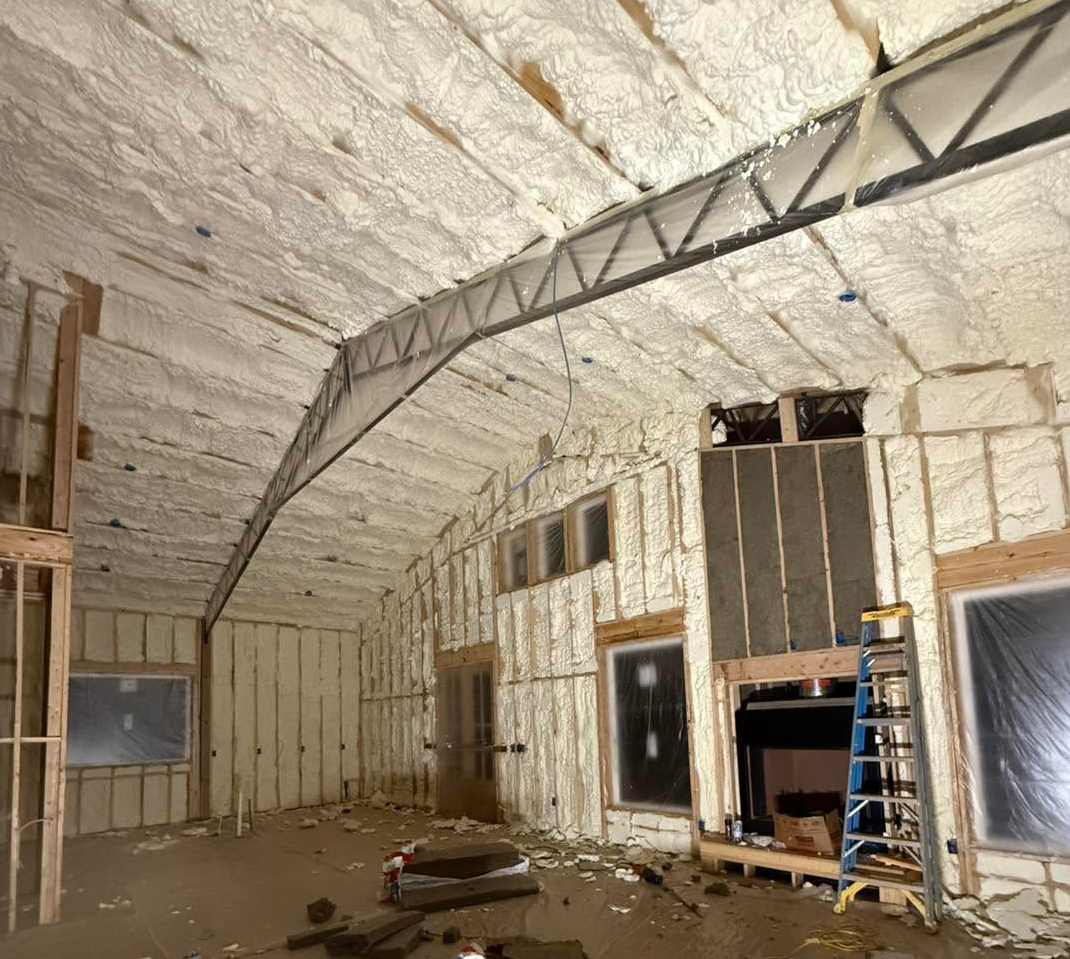
We use closed-cell foam where air and moisture sneak in. Rim joists are the big one. That band of framing around the top of the foundation leaks air in almost every house, and batts stuffed against it rarely seal.
Foam also works well on the underside of the roof deck when the HVAC unit and ducts are in the attic, which is common in two-story homes around Newnan. It adds some stiffness to the framing and stops water vapor at the same time.
It costs more per square foot than the other options, so we only use it where it changes how the house performs.
Fiberglass Batts Still Have a Place
Interior walls, standard exterior walls and floors are all fair game for unfaced or kraft fiberglass batts. They're inexpensive, quick to install and meet Georgia code when they're cut and fitted properly.
Fitting is where it goes wrong. A batt jammed behind wiring or squeezed around a junction box loses a real chunk of its rating, and we see that a lot in rushed spec homes.
Pairing batts with foam is common. Foam the rim joists, seal the top plates and put batts in the wall cavities. You get most of the air sealing benefit without paying spray foam prices for every wall.
What Goes in the Attic
If you have a standard vented attic with the HVAC equipment somewhere else, blown-in insulation is hard to beat. It covers the whole ceiling evenly, works around trusses and wiring and gets you to R-38 or higher without much trouble. Georgia code calls for at least R-38 at the ceiling on new construction, and we often go past that over rooms under a low roofline.
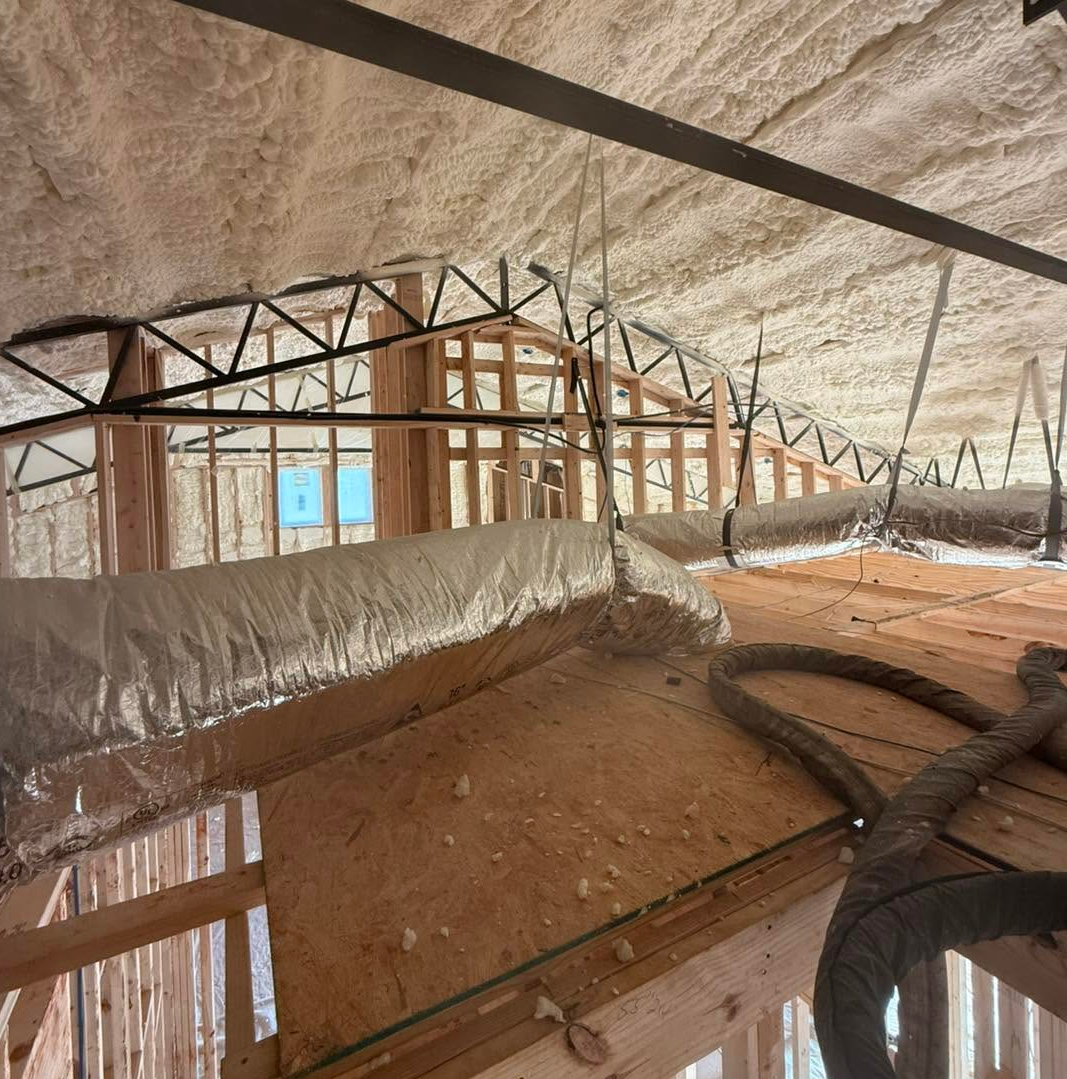
If the air handler and ductwork are going in the attic, things change. Those ducts can sit in 130 degree air for months. Foaming the roof deck instead keeps the attic close to indoor temperature and takes a lot of strain off the system.
How Georgia Humidity Changes Things
In a humid climate, air sealing matters as much as thickness, and people tend to overlook it. Warm, damp outdoor air that slips through gaps in the shell brings moisture with it, and that moisture can condense on cool surfaces inside the walls in summer. Over time you get mildew and soft framing.
Foam at the rim joists, top plates and window rough openings cuts down on that air movement. It also helps to think about the crawl space or slab edge, because ground moisture is constant in Coweta County clay. A tightly sealed house needs proper fresh air ventilation, so tell your HVAC contractor about your insulation plans early. They size equipment differently for a tight house.
What to Ask Your Builder Before Drywall
Ask who's doing the insulation installation and what goes where. Get the R-values for walls, ceiling and any floors over unconditioned space in writing. Ask whether the rim joists will be foamed or just batted, and when the insulation inspection is scheduled.
If the builder allows it, walk the house yourself before drywall goes up and look for gaps, squashed batts and bare spots around windows. If you're building custom, you can often hire your own insulation contractor and coordinate directly with the framing schedule.
Building in Newnan This Year?
We're a family-run insulation company based in Senoia, and new construction around Newnan is a big part of our work. Send us your plans or ask your builder to loop us in and we'll go through the house room by room.
We price every job off its own drawings, so we'll quote you once we know the square footage and what goes where. Get in touch before framing wraps up and we'll fit you into the schedule.
Common Questions About Home Insulation in Newnan
Is spray foam worth it for a new home in Georgia?
Usually in the places that leak the most, like rim joists, top plates and the roof deck when ducts are in the attic. You rarely need to foam every wall to get a comfortable, efficient house.
What R-value does Georgia code require for new homes?
Roughly R-13 in exterior walls and at least R-38 at the ceiling for most new homes. Check with your builder or local inspector for the exact requirements on your plans.
Can I hire my own insulation contractor on a new build?
On custom builds, often yes. Talk to your builder first so the insulation crew is scheduled between the rough-in inspection and drywall.
Should the attic be vented or sealed with spray foam?
If the HVAC equipment and ducts are in the attic, a sealed attic with foam on the roof deck usually performs better. With nothing up there, a vented attic with blown-in insulation is the simpler and cheaper choice.
When is the right time to insulate a new house?
After framing, plumbing and electrical rough-in pass inspection and before drywall goes up. That window can be short, so book your insulation crew early.
